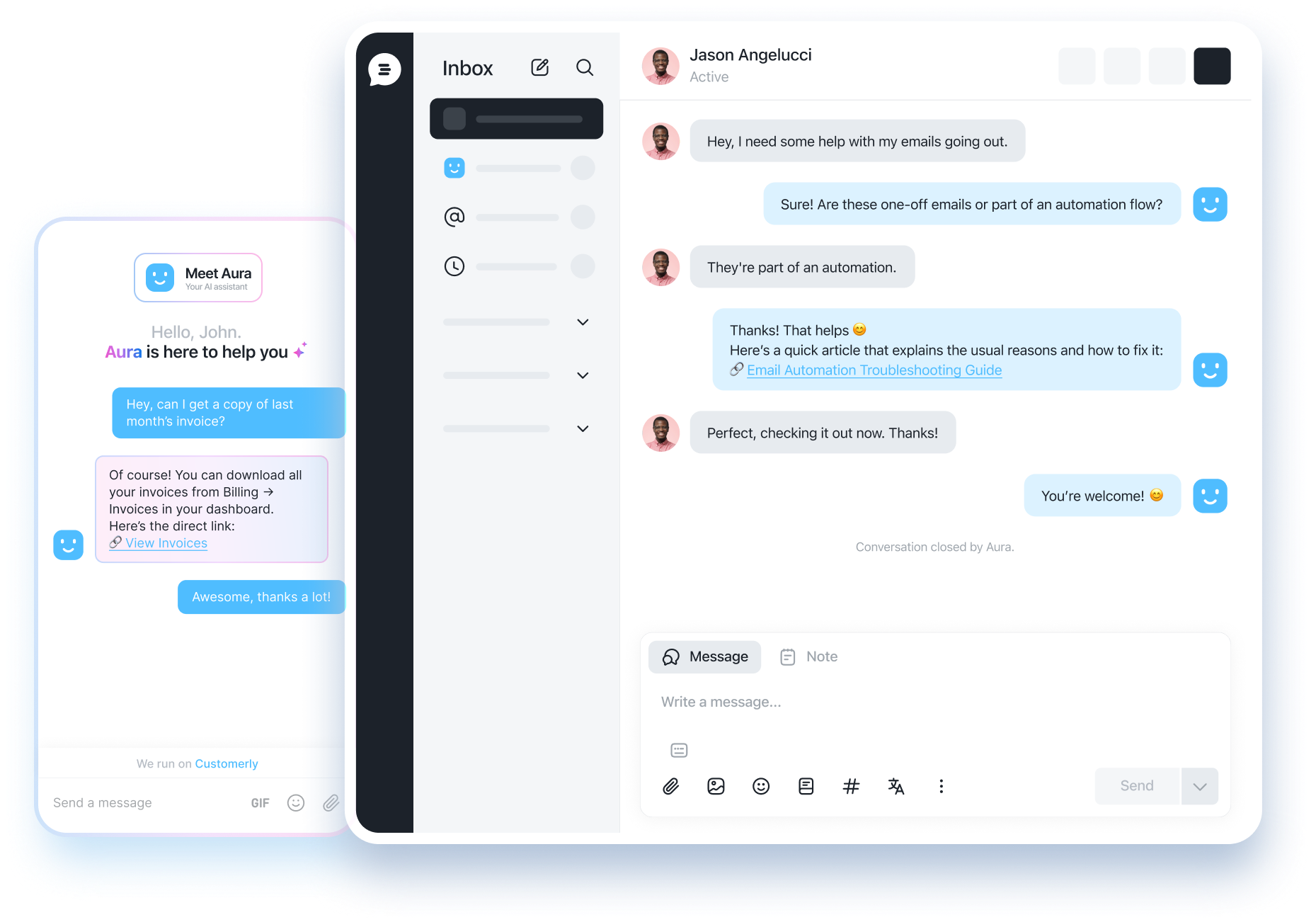


Agent Empowerment
Agent empowerment refers to the strategy of equipping customer service representatives with the necessary tools, authority, and resources to satisfy customer needs.
Definition
Agent empowerment refers to the strategy of equipping customer service representatives, also known as agents, with the necessary tools, authority, and resources to make decisions that satisfy customer needs. It involves giving agents the freedom to use their judgment and skills to solve customer problems, rather than strictly adhering to scripted responses.
Usage and Context
In the context of customer service, agent empowerment is crucial for providing high-quality service. Empowered agents can provide personalized solutions, leading to improved customer satisfaction and loyalty. They can also help identify and address systemic problems in the business by providing feedback based on their interactions with customers.
FAQ
What does agent empowerment involve?
Agent empowerment involves providing agents with the necessary training, tools, and authority to make decisions that satisfy customer needs.
Why is agent empowerment important?
Agent empowerment is important because it leads to improved customer satisfaction and loyalty, and helps identify and address systemic issues in the business.
Related Software
Software like customer relationship management (CRM) systems, knowledge management systems, and data analytics tools can help facilitate agent empowerment. These tools provide agents with the information they need to make informed decisions and provide personalized service.
Benefits
Agent empowerment can lead to numerous benefits, including improved customer satisfaction, increased agent satisfaction and retention, and increased business efficiency and profitability.
Conclusion
In conclusion, agent empowerment is a crucial strategy for providing high-quality customer service. By equipping agents with the necessary tools and authority, businesses can improve customer satisfaction and loyalty, and address systemic issues in the business.
Related Terms
A/B Testing
A/B testing is a digital marketing strategy used to compare two versions of a webpage to determine which one performs better.
ABM (Account-Based Marketing)
ABM (Account-Based Marketing) is a targeted marketing strategy where individual customer accounts are treated as markets of one.
Account Health Score
The Account Health Score is a data-driven metric used by companies to measure the health of a customer's account, helping to predict customer behavior and satisfaction.
Adaptive Content
Adaptive content refers to the strategy of customizing and personalizing digital content based on the individual user's context to improve engagement and conversion rates.
Advanced Email Metrics
Advanced Email Metrics provide in-depth insights into the effectiveness of email campaigns, aiding in strategy refinement and improved engagement.
Affiliate Network
An affiliate network is a platform that connects businesses with affiliate marketers, providing a centralized place for affiliate marketing programs.
Agent Performance
Agent Performance refers to the measure of efficiency and effectiveness of an agent in a customer service setting, impacting customer satisfaction and business success.
Agile Marketing
Agile Marketing is a tactical approach promoting quick, data-driven decisions to pursue high-value marketing efforts.
AHT (Average Handle Time)
AHT (Average Handle Time) is a key performance indicator used in call centers to measure the total time spent on a customer interaction.